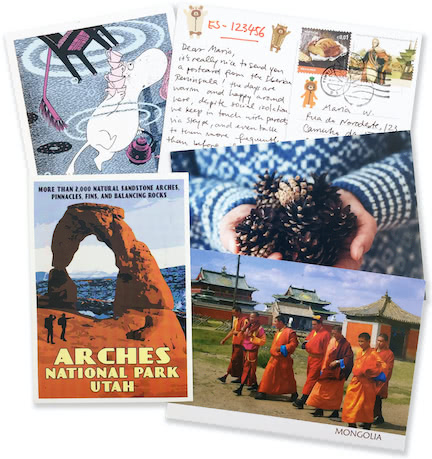
Postcrossing is a free, global postcard exchange project that connects random people around the world through real mail. Founded in 2005 by Portuguese software engineer Paulo Magalhães, the platform has grown into a vibrant community of over 800,000 active members across 211 countries who have exchanged more than 77 million postcards — and counting.
The name blends "postcard" with "crossing" — crossing borders, cultures, and continents with every card sent. For stamp collectors and philatelists, Postcrossing is a wonderful way to receive stamps from every corner of the world: each card carries the postage of its country of origin, making every delivery a mini philatelic event.
How Postcrossing Works
The concept is wonderfully simple. Sign up for free at postcrossing.com, and the platform takes care of the rest:
- Request an address. The system gives you a random recipient's address along with a unique Postcard ID. You send a postcard to that person anywhere in the world.
- Send your card. Write your message, note the Postcard ID on the card, add the right postage, and drop it in a mailbox. The recipient registers the card using the ID once it arrives.
- Receive a card. Your address is now added to the pool. Another Postcrosser somewhere in the world pulls it and sends you a card. You never know who or where it will be from!
- Register and repeat. When your card arrives, register its Postcard ID on the website. This triggers another address request for the sender and frees up a slot for you to request a new address.
Beginners can have up to 5 cards travelling at any one time. As you send more cards, this limit increases — a system that rewards active participation. Each time a card you sent is registered, you can immediately request a new address, keeping the exchange flowing.
The Story Behind Postcrossing
Paulo Magalhães launched Postcrossing on 14 July 2005 from his home in Portugal. Inspired by the Bookcrossing project (which tracks books as they travel between readers), he wondered: why not do the same with postcards? He built the website in his spare time, and within months the project had thousands of users. By 2008, over 100,000 postcards had been exchanged. By 2019, the milestone hit 50 million.
Magalhães has said the project's appeal lies in the "surprise factor": "You send a postcard to someone you don't know, and you receive one back from someone else you don't know. Every time you open your mailbox, it's a little window into another part of the world." The project has been featured by the BBC, The Guardian, National Geographic, and PostNL in the Netherlands, which actively promotes Postcrossing as a way to celebrate the joy of sending mail.
Why Postcrossing Matters for Philatelists
For stamp collectors, Postcrossing is a treasure trove. Every postcard you receive arrives with a real stamp — often multiple — from the sender's country. Over time, you can build a diverse worldwide stamp collection simply by participating. Many Postcrossers take special care to choose beautiful or unusual stamps, and some even coordinate with postal administrations to use commemorative or limited-edition issues.
In the Netherlands, PostNL has its own dedicated Postcrossing campaign page promoting the hobby. Dutch Postcrossers often use special PostNL stamp sheets and commemorative issues on their cards, making the Netherlands one of the most philatelically exciting countries to receive mail from.
Fun Facts
- The most postcards ever sent by a single person: over 65,000.
- Finland has the highest number of Postcrossers per capita in the world.
- The longest distance a Postcrossing card has traveled would circle the Earth thousands of times over.
- Many Postcrossers maintain blogs and albums documenting every card they receive, often with detailed notes on the stamps and postmarks.
- Postcrossing has inspired similar projects like Bookcrossing (for books), Where's George? (for US dollar bills), and Trackable Items in geocaching.
How to Get Started
Ready to join? Here's what you need:
- A postcard — any will do, but many Postcrossers love cards showing your country, city, culture, or personal interests.
- A stamp with the correct international postage rate for a postcard from your country.
- A free account at postcrossing.com.
Write a short message, add the Postcard ID, affix your stamp, and send it off. Then wait for the magic of your mailbox — your first Postcrossing card could arrive from Finland, Japan, the United States, or anywhere in between.
Postcrossing at a Glance
| Founded | 14 July 2005 |
| Founder | Paulo Magalhães (Portugal) |
| Website | postcrossing.com |
| Membership | Free |
| Active Members | 800,000+ |
| Countries Reached | 211 |
| Total Cards Sent | 77 million+ |
| Max Cards Travelling (New) | 5 |
| Also Known As | Postcard Crossing |
| Inspired By | Bookcrossing |